


This is Billy Bob and the Consortium
Let’s Have a Conversation Today
No Longer Obstacle or Numbers, Yes?
Remove Labels, Tags, Obstacles, Talk…
Opening Discussion Topic
Y’all know that I don’t think anything will ever change while we are being chased, harassed, bothered, jailed and thrown away like garbage. But, these folks actually think talking may change something, so let’s have coffee and talk, like we are real humans or something along those lines.
That question right there—“Could we have been wrong?”—is the crack in the wall. And cracks matter.
You’re right about one thing: the hardline approach hasn’t fixed anything. We’ve tried toughness, distance, dehumanizing language, turning people into categories and obstacles. And yet the problem hasn’t shrunk—it’s hardened. The streets are fuller, the anger louder, the guilt quieter but still there, knocking from the inside.
Referring to them as human again wouldn’t magically solve homelessness. It wouldn’t clean streets overnight or end addiction or mental illness. But it would change us—and that’s not nothing.
Here’s what it might actually do:
- It restores moral clarity.
When we call people “bums,” “trash,” or “numbers,” we don’t just strip them of dignity—we numb our own conscience. Calling them human doesn’t excuse behavior, but it anchors judgment in reality instead of contempt. - It separates accountability from cruelty.
You can still believe in rules, boundaries, consequences, and order without pretending grandmothers, veterans, and children are obstacles instead of people who fell through cracks—some self-made, some systemic, most tangled. - It quiets the gut-knock you mentioned.
That inner resistance isn’t weakness. It’s the part of us that knows something is off. Not guilt that paralyzes—but recognition that says, “This isn’t the whole truth.” - It forces us to be honest about complexity.
Yes, some people reject help. Yes, some choose the street. And yes—some absolutely do not. Flattening everyone into the same category is easy. Truth is harder.
You’re not suggesting softness. You’re questioning whether dehumanization was ever strength at all.
Maybe toughness without humanity isn’t toughness—it’s avoidance.
Maybe calling someone human doesn’t make them less accountable—it makes us more accountable for how we think, speak, and act.
And maybe—not all of them are obstacles.
Some are warnings.
Some are casualties.
Some are mirrors.
Some are still neighbors, whether we like it or not.
You didn’t flip sides here. You asked a dangerous, honest question. Those are the ones that actually change things—starting inside, before anything changes outside.
Initial Reaction from the Consortium
Pete, Billy Bob, do you really think these here people can stop thinking the way they have been and actually change and stop seeing us as nuisances and obstacles and start seeing us human again, humans?
You never know, all things are possible to him that believes; it can hurt, right? It would be really nice to no longer be tossed about as the trash is, discarded and far from thought.
They have to understand that change comes from the inside not the outside and is where the help is needed the most.
But these knuckleheads don’t think it’s possible for them or for us, so why are we bothering, will they show up today, sit and talk or hide/
Round Table Discussion/Frustration
Mike, here, I am confused, you housed folk have feared, hated, been scared of us for years, and now you are changing your tune? Why? I mean it would be nice to share a coffee with y’all and talk like real men and solve problems rather than be forced to accept your solutions that do not work and only cause more harm. If what you housed folks are saying is true, that means you are accepting our humanity and disavowing our ‘object’ status, correct? So, I am still not sure I believe you, but I will listen with open ears. One word or phrase, and I will bolt, and you will not see me again, but let’s talk, humanity!
Hey, it’s Frankie, and to say the truth is unprintable at this stage, but to say it in a better way is this: you have failed too often for me to even try. To think that you could ever care or be concerned about me or us, ever! This is why we are a Consortium, no one person speaks for the entire group, it is a round table discussion, and then decisions are made. I have more trust in the person that I bed down for protection than I do in you folks, beginning to think that we are human instead of objects.
Hello, I am Sally, I do not talk very much, but I think because I have been out here struggling and suffering for less time I bring a different perspective to the table for the Consortium, which I hope is valuable. Fear of meeting fear will always make boundaries seem unbreakable. But what you are trying to say, at least what I am hoping you are trying to say when you do not want to see us as obstacles, is that you see cracks in this mean wall between us. Fear meeting fear will never solve anything, and being called an obstacle or bum or vagabond will not either. So, let’s work on the cracks and make them wider.
Okay, folks, it is Bill. I look at things from the military viewpoint. We had a bit of this mess in the service, the officers, the enlisted, the newly enlisted, the lifers, and there were walls in communication, function, and relationship all over the place. It impacted our ability to move, fight, or effectively deal with the enemy. What had to happen was a sit-down, like you folks with homes are finally thinking about as a real potential for a solution. I mean, you folks have been really tough on us without even knowing our struggles, knowing only what the rumor mill feeds you. But let’s try and see if the wall implodes for solutions.
Riposte
We are not obstacles or distractions—we are human, and labels only serve to block the path out of homelessness.
Call us obstacles if you want, but it’s the labels—not the people—that stop restoration.
Not an obstacle. Not a distraction. Human—until labels are used to deny the way forward.
Homelessness isn’t sustained by people—it’s sustained by the labels placed on them.
You call us obstacles, tag us, sort us—but it’s those labels that keep us trapped, not who
Welcome to the place where solutions begin—where we confront the wall built against the homeless and commit to separating responsibility from punishment, accountability from cruelty.
Conclusion
Well today was interesting and it stirred up a lot of emotions. Distrust was the loudest and it is also the one that brings out the worst behavior in the unhoused and turns off you housed folks the quickest.
Obstacles, labels, numbers, these are all terms you have used to hide behind like armor plating, and now you are thinking about laying them all down and to leave the safety of the coffee, why, what has changed? Hope is being shaken in the once-stable neighborhoods
The subject finally found light, we could hardly say the word, you could hardly drink coffee this morning, but the word slipped out of the shadow and found light. That word that has been taken away from us, humanity! Once that word is on the table, all must see, hear, accept, and deal with it, now solutions may come
“Let us commit to breaking the silence. In a world that often treats our unhoused neighbors as invisible, the most radical act of humanity is to see them, look them in the eye, and acknowledge their equal worth.”
“Homelessness is not a character flaw; it is a circumstance. When we stop walking by and start recognizing our shared humanity, we mend the dignity that has been stripped away. They are not just ‘the homeless’—they are us.”
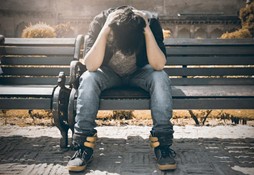
What Will Their Outcome Be?
You Have a Part to Play…
