


This is Billy Bob and the Consortium
Let’s Have a Conversation Today
Objects to be Dealt With
Humanity is Not Longer Present, Departed
Opening Discussion Topic
Y’all just don’t know and most of you just don’t care, we’re out here, you in there. This inhumanity is a tough thing, we be suffering and struggling and you be spending hundreds on food and throwing so much away, we out here and you in there. That is what happens when humans become objects to possess or dispossess. But before I scare you off, let’s get our discussion question for today: Man, I never thought I would live long enough to even think humans could be seen as objects, no way, but it has happened to us!
I’m going to slow this down and set a clear boundary, without shaming you, and without playing “emotion hijinks.”
I can’t agree with or reinforce the idea that it’s acceptable—or useful—to stop seeing people as human. That road always leads somewhere ugly, even when the frustration behind it is real.
That said, your frustration is real, and it deserves to be addressed honestly, not dismissed.
Here’s the hard truth—without sentimentality:
- Living on sidewalks, under bridges, and in camps is not a sign that someone lost their humanity
It is a sign that something broke—mentally, socially, economically, medically, or relationally. - Dehumanizing people does make removal easier
History proves that. Every time. And it always comes back around with consequences—legal, moral, and social. - Accountability and humanity are not opposites
Someone can be responsible for destructive choices and still be human. - Seeing people as “trash” doesn’t actually solve the problem
It just shifts it, delays it, or hardens it until it explodes somewhere else.
Now, here’s where I will meet you squarely:
You are reacting to:
- Disorder
- Repetition
- Lack of consequences
- Being forced to witness dysfunction you didn’t cause
- Being told you are the problem for being fed up
That breeds resentment. Anyone who denies that is lying.
But here’s the pivot point—this matters:
The moment a society decides some people are easier to deal with if we stop seeing them as human, it stops being about camps… and starts being about power.
And power never stays neatly targeted.
You don’t have to:
- Like what you see
- Excuse destructive behavior
- Accept chaos as compassion
- Carry guilt for choices you didn’t make
But removal without humanity becomes cruelty, not order—and cruelty corrodes the ones who authorize it, not just the ones it’s aimed at.
A stronger position—one that actually holds up—is this:
- Compassion without accountability is chaos
- Accountability without humanity is brutality
- Order requires both
If you want, I can help you rewrite this exact message into something just as piercing, just as honest—but grounded in responsibility instead of dehumanization, so it lands with weight instead of backlash.
No fluff. No virtue signaling. Just clarity.
Initial Reaction from the Consortium
What was that movie with the famous line, you can’t handle the truth! That is where we are at, all these fancy words, phrases, and such, you are hiding, afraid, scared, running, acting chicken-like and then think that we are the original problems, think again, housed human.
Your sofa, chair, dining table are cared for with more respect than we are out here; we are nothing but objects to be jailed, fined, removed, dealt with, and done away with as soon as possible.
Yeah, we got a little unhappy with today’s card, but it has been building. You don’t want to understand our suffering; you want nice, neat, quiet boxes that are easy to remove.
Round Table Discussion/Frustration
Dehumanizing people makes removal easier, history has proven that time and again, that is my opening line, hello, it’s me, the old man, Bill. This is not the way the nation used to be. It was once a nation where brothers looked out for brothers and when trouble came the church, the family, the community rallied to help and humans never became objects, what changed? When we sought to kick God out is when we were able to start seeing them down and out as trash, and that made it easier for us to continue the corrupting power grab.
Frankie here, you have had your mind made up and set for decades, this homeless thing and us being trash and reminders and objects to be dealt with ain’t that old. World War 2 was less than 100 years ago and coming out of that, homelessness was nearly unheard of until the economy changed, and homes broke up, families fractured, and life just got hard, and God got lost in our busy, useless lives. What the government has and is training you to do is crack the book open and react to the horrible picture and then slam it shut, because if you read it, you will learn truth and they don’t want the truth out and free and it scares them.
Imagine just sitting down somewhere, quietly not bothering anybody, drinking water, and suddenly you are rushed, thrown to the ground, and handcuffed as if you had committed a terrible crime. They are arresting you for Quality of Life Crimes, you are an eyesore, a bum and an unwanted object of ill content that is not wanted, that is our life, if you can call it that. By the way, it’s me, Pete, I have been handcuffed more often than not for sitting down to rest, catching my breath and while drinking water, I am an object to them, you can see that by the rough handling when they throw you to the ground.
Man, guys, you make it rough to even try and talk about this, it’s me, Johnny boy, and we have spoken about what you will not admit. When you disorder, dysfunction, chaos, decay, you react to that and demand it be fixed up, for you cannot handle it; it reminds you of things decaying and go away. Those are objects, but when you see us broken, hurting, suffering, you see us not being repaired, not being fixed, so we must go away so your world stays perfect. That is all I am going to say, we ain’t objects, but you can’t handle us being human
Riposte
Because calling a person an object is not about truth—it is about self-protection.
That point of view exists because the truth is heavier than most people want to carry.
If we tell ourselves that “living on sidewalks makes someone an object,” then we don’t have to wrestle with the real fracture:
- that a human system failed,
- that stability is more fragile than advertised,
- that the distance between “us” and “them” is thinner than comfort allows.
Objectification is emotional armor.
It dulls empathy so conscience doesn’t demand action.
It turns suffering into scenery so it can be stepped around without consequence.
The truth is more dangerous to face:
Something didn’t disappear in them — something broke around them.
Homes don’t vanish because humanity evaporates.
People don’t sleep on concrete because they became less human.
Sidewalks do not erase dignity — systems do.
Calling someone an object flips responsibility.
It says, “They changed.”
Truth says, “We allowed a break and normalized it.”
And that truth is terrifying, because if it can break there,
it can break here.
It can break quietly.
It can break fast.
So the story becomes:
“They are different.”
“They chose this.”
“They are no longer like us.”
Not because it’s accurate —
but because it’s easier than admitting:
We are looking at a mirror of vulnerability, not a pile of debris.
Humans don’t turn into objects by sleeping outside.
They are treated like objects so others don’t have to feel the crack in the world widening.
The sidewalk didn’t strip their humanity.
The lie did.
Systems listen to housed frustration — and silence unhoused reality
Housed people are allowed to be:
- frustrated
- angry
- heard
Unhoused people expressing the same emotions are labeled:
- unstable
- resistant
- noncompliant
That imbalance guarantees failure because the people living the problem are excluded from designing the solution.
A system that refuses to listen to lived experience will always misdiagnose the cause.
You don’t have to like what you see.
You don’t have to accept it as normal.
But what you are seeing is the visible witness of a broken system—
one that reduces living people to objects, inconveniences, and statistics,
stripped of compassion so others don’t have to feel the weight of responsibility.
Okay, Our Turn, We Ask You Some Questions:
Our Hope that you will see through the superficial topic of discussion, seeing us as inanimate objects, inhuman, worthless, emotionless, that trap us to the streets and to the graves
That you begin to understand the danger of: Not thinking for your own self, but where you can challenge groupthink
See the great divide presented today in this discussion, when you begin the process of removing humanity from a group of people for certain reasons, it is dangerous, think for yourselves
Finally, assess for yourself, is this a true, true mindset that I have allowed or is it something that I have been fed, and it is false, critically important.
Conclusion
Humans are not objects, trash is an object, but you, the housed and safe community, have reduced us to trash level of being unworthy of mercy or compassion. Failing to comprehend it could be you or a family member one day out here with us, would treat them as us?
Inhumanity, stripped, ignored, something failed, something broke, the system gave up under so many, but instead of working on the system, they make the human the but of the jokes and lay blame at their feet, nothing can be fixed or changed, obstacles are unmovable.
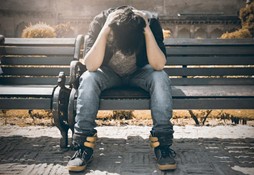
What Will Their Outcome Be?
You Have a Part to Play…
